You Built a Beautiful Office. Then You Let Your Head of I.T. Decorate the Room Where Deals Close.
How the setting of an online sales conversation contributes to brand identity, what research suggests, and how Faceport brings branding into video meeting rooms.
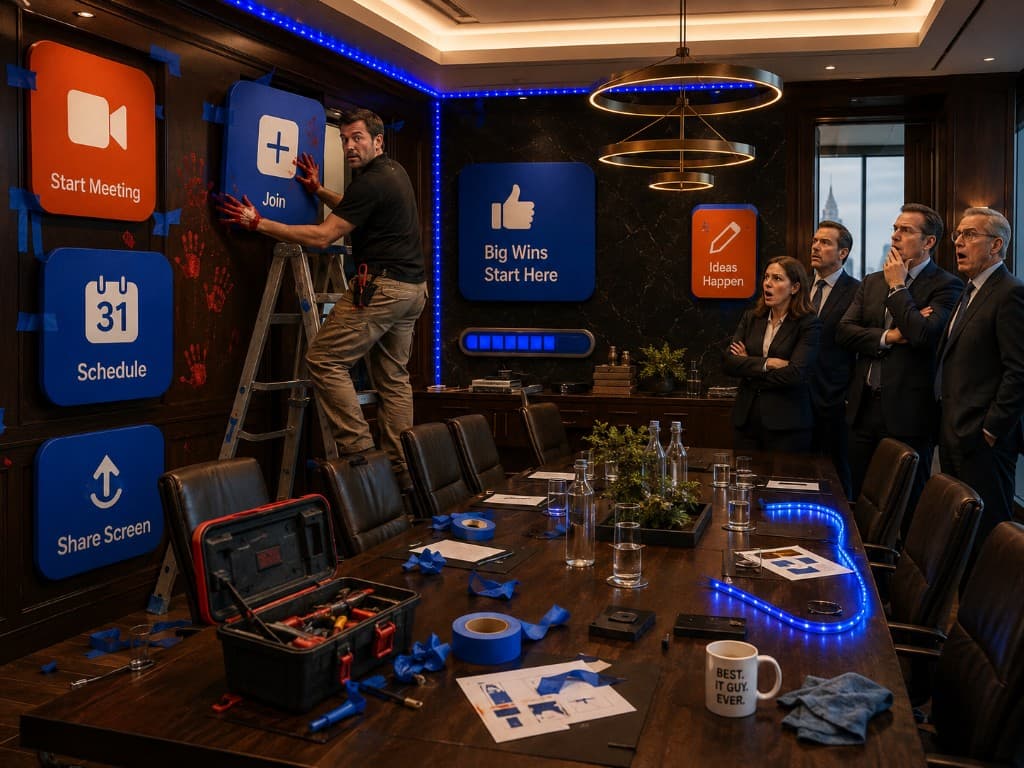
You spent years and millions on brand excellence. The logo. The typography system. The marble lobby. The wood-paneled boardroom with the skyline view. Every detail was scrutinized because you understood something fundamental: how you present yourself is inseparable from how the market values you.
Then the sales process moved online. And somewhere along the way, the decision-maker for the aesthetics of your most important conversations stopped being the CMO, the brand team, or the founder who obsessed over every panel of office wood. It became the IT department. It became the CIO.
That shift is quietly hurting sales. Companies invest in beautiful offices and rigorous branding, yet the most critical steps in the sales process now happen in cheesy, commodity digital rooms that look identical to every competitor’s. Brand integrity, continuity, and consistency did not follow the deal into the screen.
Sales moved online. Brand excellence stayed in the lobby.
Digital channels are now an established part of B2B buying. McKinsey’s May 2026 Global B2B Pulse report, based on nearly 4,000 decision-makers across 13 countries, finds buyer interactions divided roughly evenly among in-person, remote, and digital channels. Buyers use an average of ten channels across their purchasing journey. Videoconferencing is among the five leading channels for discovering and evaluating suppliers.
Gartner’s May 2026 buyer research reinforces that shift: 70% of respondents preferred a completely digital, self-service buying experience. The survey covered 645 B2B buyers in August and September 2025. Human expertise still matters: 69% preferred to validate AI-generated insights with sales reps.
For SMB and enterprise sellers alike, the implication is clear: your brand has to travel across the whole buying journey. When a demo, negotiation, or executive conversation takes place on video, the room on screen is part of the experience you are asking the buyer to trust.
If brand continuity mattered when the buyer walked into your office, it matters at least as much when the buyer joins your call. The environment is still sending a message. The only question is whether that message is yours or someone else’s software default.
The room on screen changes the first impression
There is research on the visual setting of the call itself. In a 2023 study published in PLOS ONE, Durham University researchers asked 167 participants to rate simulated video-call images. Backgrounds with plants or a bookcase received higher ratings for trustworthiness and competence than living-room and novelty backgrounds.
The experiment measured first impressions rather than sales conversions, and used six backgrounds in still images. Its finding is nevertheless relevant to anyone meeting a buyer on video: the setting can influence how the person on screen is perceived. For sales teams, that is a reason to give the digital meeting room the same deliberate attention as the room where they would welcome a prospect in person.
What brand-consistency surveys suggest
In a 2019 survey of 200 organizations, Lucidpress (now Marq) reported an estimated 33% revenue benefit from consistent brand presentation. An earlier Demand Metric and Lucidpress study reported respondents' estimate of an average 23% revenue increase from always presenting a brand consistently. These are survey estimates about branding overall, not controlled evidence that a particular meeting environment increases sales.
Confusion is exactly what happens when a buyer’s first impression is your polished website and pitch deck, and their second impression is a generic meeting lobby shared by ten thousand other vendors. Continuity breaks. Trust frays. The premium signal you paid for evaporates at the moment of highest stakes.
Schwarzman understood: presentation is the business
When Stephen A. Schwarzman co-founded Blackstone in 1985, the firm had only blank paper, ambition, and a conviction that presentation was not optional. As Schwarzman has said in interviews drawing on his memoir What It Takes: Lessons in the Pursuit of Excellence:
“The first thing I did when we started Blackstone, I know this will sound odd. I hired a graphic design firm to design our logo and our stationery. Because I felt that the way we presented ourselves was all important. Your brand, your name, the way things look say something.”
That instinct did not stop at letterhead. Schwarzman has described filtering decisions through a simple sieve: good for the brand, or not. Hires. Offices. How Blackstone showed up in the world. Early Blackstone operated from modest offices at 345 Park Avenue, but the standard of presentation was never modest. Brand was treated as infrastructure, not ornament.
Ask yourself what Schwarzman would say about handing the aesthetics of your highest-stakes sales conversations to a procurement-chosen video platform. He did not leave the look of Blackstone to whoever happened to own the phone system. Modern companies are doing the equivalent every day on Zoom, Google Meet, and Microsoft Teams.
Would you close a deal in these rooms?
Below are editorial illustrations: what popular meeting products would look like if their interfaces became physical conference rooms. They are satirical, but the sales problem they dramatize is real. You would never invite a Fortune 500 buyer into a room painted like a software toolbar. Yet that is exactly the visual language of most digital sales meetings today.
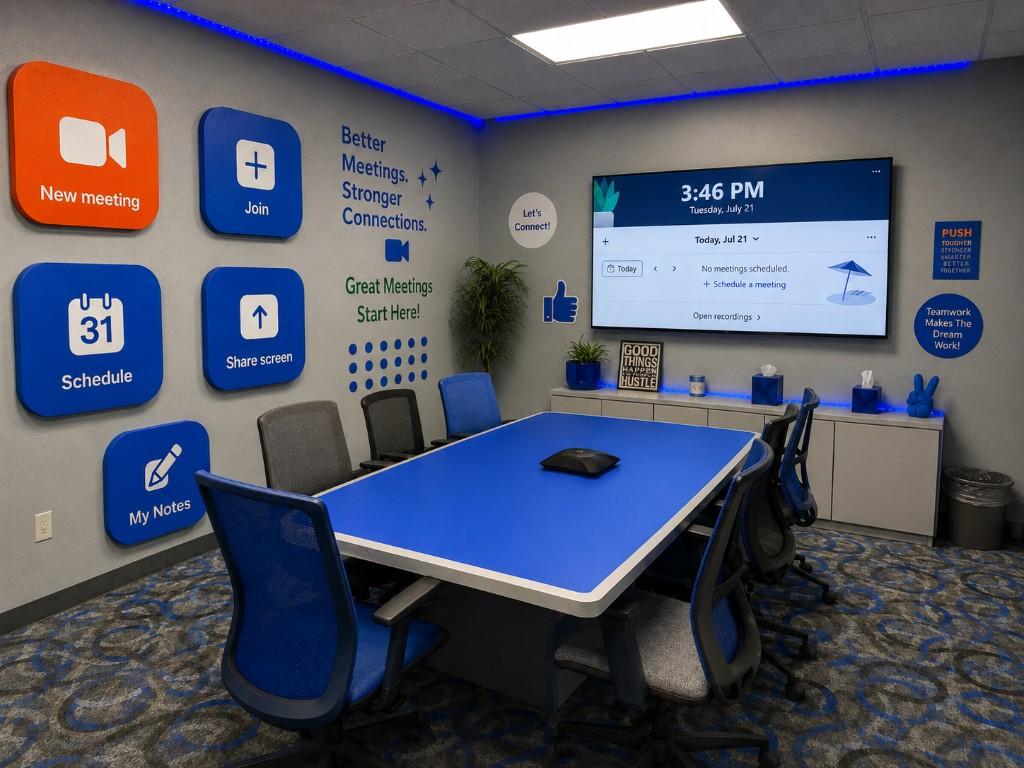
Zoom, as a room
If Zoom’s UI became a physical conference room, would you invite a prospect in?
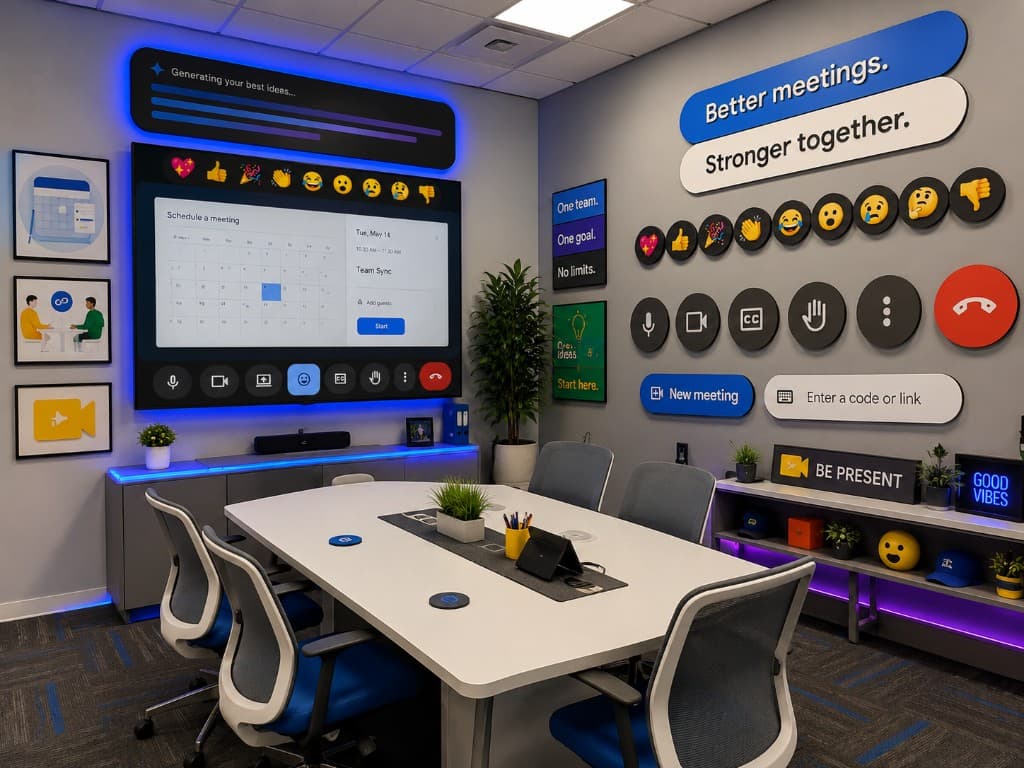
Google Meet, as a room
Emoji walls and end-call buttons make a fine app. They make a terrible sales suite.
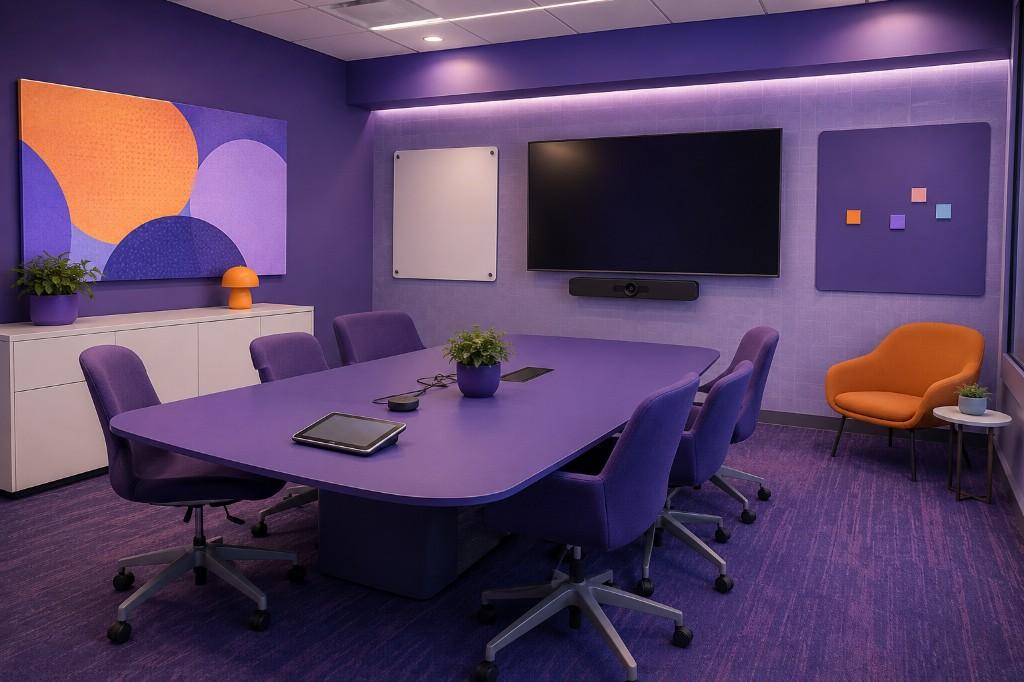
Microsoft Teams, as a room
Someone else’s brand saturates the room where your brand should win.
Not affiliated with Zoom, Google, or Microsoft.
The CIO became your brand’s interior decorator
None of this is an argument against IT. Security, compliance, uptime, and cost matter. The problem is category error: aesthetics that shape buyer psychology were assigned to a function optimized for something else. When IT picks the meeting stack, they pick the wallpaper of your digital headquarters, usually without a brief from brand, sales leadership, or the CEO who signed off on the physical office.
The outcome is predictable. Beautiful offices. Beautiful websites. Beautiful packaging. And then: a cheesy room for the close. Brand integrity collapses precisely where continuity is most valuable, in the live sales process and beyond, into onboarding, renewals, and executive relationships that also live on video.
Faceport restores brand continuity
Faceport exists for companies that refuse to let the most important conversations happen in someone else’s lobby. We give you designed video meeting rooms: meeting environments that carry your brand excellence from the invitation through the conversation, so buyers experience the same standard of presentation online that you protect offline.
Brand continuity is not a nice-to-have for digital sales. It is the difference between a company that looks intentional in every room and a company that looks like it outsourced its image to a default theme. Schwarzman hired the designers before he had the clients. Your buyers are already in the room. Make sure it is yours.
Explore Faceport meeting rooms and make a room your own.
Frequently asked questions
- Why does brand consistency matter in B2B sales?
- Brand consistency can help recognition across buyer touchpoints. Lucidpress surveys reported respondents' estimates of revenue benefits from consistent branding. Those estimates do not establish that a meeting-room design causes revenue growth. A video meeting is another place to make your brand recognizable.
- How has the sales process moved online?
- McKinsey’s May 2026 Global B2B Pulse report finds buyer interactions divided roughly evenly among in-person, remote, and digital channels, with videoconferencing among the leading channels for supplier discovery and evaluation. Gartner reported in May 2026 that 70% of surveyed B2B buyers preferred a completely digital, self-service buying experience. Digital channels are central to buying, alongside human conversations.
- What is the problem with IT choosing the aesthetics of sales meetings?
- IT and the CIO rightly optimize for security, cost, and interoperability. Those criteria rarely include brand excellence. The result: companies spend heavily on offices, logos, and marketing, then host their most critical sales conversations inside commodity meeting UIs that look the same as every competitor’s.
- Does the visual setting of a video call affect first impressions?
- Yes. A 2023 PLOS ONE study found that video backgrounds influenced ratings of trustworthiness and competence. It measured impressions of simulated calls, rather than sales conversions. The study is discussed and linked in this article.
- How does Faceport restore brand continuity in digital sales?
- Faceport provides designed video meeting rooms with room-branding options. Teams can choose a setting that reflects their company and gives online conversations a more consistent visual identity.
References
- Cook, Thompson & Ross (2023): Virtual first impressions: Zoom backgrounds affect judgements of trust and competence, PLOS ONE
- Gartner (May 20, 2026): B2B buyer preferences for digital self-service and sales-rep validation
- McKinsey (May 28, 2026): Global B2B Pulse, The surprising economics of B2B growth
- Lucidpress / Marq: State of Brand Consistency Report (2019 survey)
- Demand Metric & Lucidpress: The Impact of Brand Consistency (2016)
- Stephen A. Schwarzman: What It Takes: Lessons in the Pursuit of Excellence (book site)
- Stephen Schwarzman on brand and presentation at Blackstone’s founding (interview)
Sell from a room that looks like your company.
Choose a Faceport meeting room and bring your company's visual identity into the conversation.
Explore meeting rooms